How Authors Can Get Booked as Podcast Guests and Promote Their Book
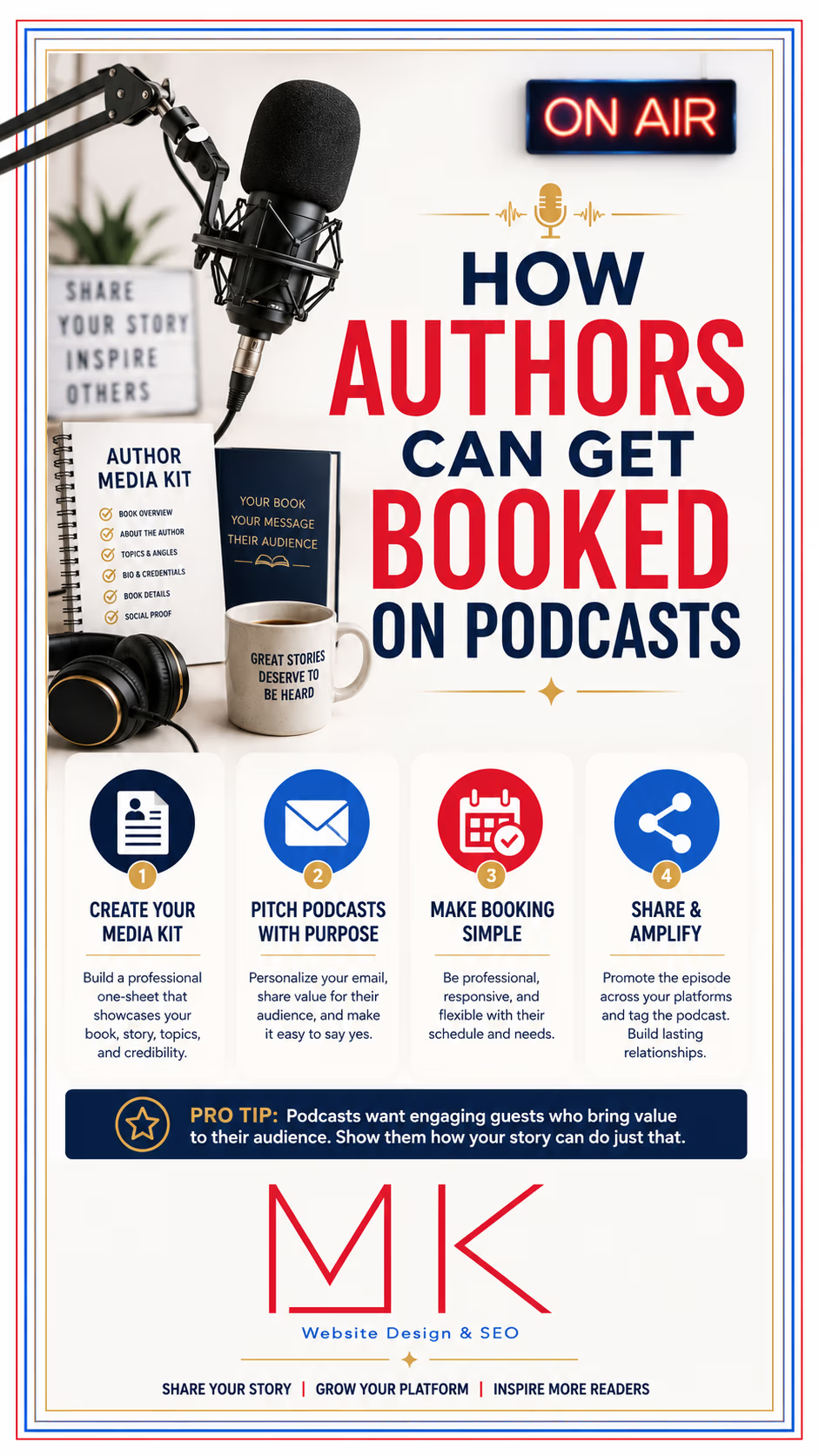
Podcast interviews give authors something many traditional advertisements cannot: time to tell the story behind the book, demonstrate their expertise, connect with listeners, and build trust through conversation.
A strong interview can introduce an author to a carefully matched audience, create evergreen online content, strengthen search visibility, generate social media clips, and open the door to reviews, speaking invitations, book-club discussions, media coverage, and future collaborations.
However, successful podcast outreach requires more than sending the same email to hundreds of hosts. Podcast hosts are looking for guests who understand their show, can serve their listeners, and can contribute a useful or memorable conversation.
In this step-by-step guide, MK Marketing explains how authors can identify the right podcasts, prepare professional materials, write personalized pitches, follow up respectfully, deliver a valuable interview, and use every appearance to continue promoting their book.
Why Podcast Interviews Work for Authors
Podcasts allow listeners to spend more time with an author than they typically would through a social media post or advertisement.
During an interview, the author can:
- Explain why the book was written
- Share the personal story behind the work
- Discuss the book’s themes
- Demonstrate professional expertise
- Read a brief passage when invited
- Answer questions readers may have
- Connect the book to current or evergreen topics
- Introduce the audiobook and narrator
- Invite listeners to visit the author website
- Build familiarity and credibility
The goal is not to turn every interview into a commercial. The best podcast guests offer insight, stories, encouragement, education, or entertainment first. The book becomes the natural next step for listeners who want to learn more.
Step 1: Define the Goal of the Podcast Campaign
Before researching shows, decide what the author wants the campaign to accomplish.
Possible goals include:
- Introduce a new book
- Relaunch an older title
- Build the author’s name and credibility
- Reach readers in a specific genre
- Promote an audiobook
- Attract speaking opportunities
- Connect with bookstores and libraries
- Reach book clubs
- Support a virtual book tour
- Increase website traffic
- Build an email list
- Discuss a timely issue connected to the book
- Position the author as a subject-matter expert
The campaign goal will determine which podcasts are most relevant.
A novelist may focus on literary, genre, storytelling, culture, and author-interview shows. A memoirist may also consider podcasts about the life experience, community, profession, or social issue explored in the book. A nonfiction author may target shows serving readers, professionals, organizations, or communities that can benefit from the author’s ideas.
Step 2: Identify the Audience the Author Needs to Reach
The largest podcast is not always the best podcast.
A smaller show with a highly relevant and engaged audience may produce more meaningful results than a large general-interest program whose listeners have little connection to the book.
Define the ideal listener by considering:
- Age range
- Interests
- Profession
- Location
- Reading preferences
- Challenges or questions
- Favorite genres
- Organizations or communities
- Values
- Reasons they might purchase the book
Then describe the connection in one sentence:
This book is especially relevant to listeners who…
For example:
- Enjoy historical fiction inspired by overlooked events
- Are rebuilding their lives after loss
- Lead teams and want to improve workplace communication
- Teach children about kindness and resilience
- Follow true-crime investigations
- Care for family members with dementia
- Enjoy faith-based fantasy
- Want practical guidance for starting a business
This sentence becomes the foundation of the research and the pitch.
Step 3: Develop the Author’s Podcast Positioning
Podcast hosts do not book a guest simply because the guest has published a book. They book a conversation that will interest their listeners.
Create a clear positioning statement containing:
- Who the author is
- What the author can discuss
- Why the subject matters
- What listeners will gain
- How the book supports the conversation
Example:
Jane Smith is a grief educator and the author of Finding Morning. She helps families understand how grief changes relationships and can share practical ways to support someone after a major loss.
The book is included, but the value of the conversation comes first.
Step 4: Create Three to Five Strong Interview Angles
An interview angle is a focused conversation the author can offer.
Avoid broad topics such as:
- My book
- My writing journey
- Becoming an author
Those topics may work for an author-focused show, but most hosts need a clearer reason to invite the guest.
Stronger angles might include:
- Five mistakes families make when discussing grief
- What historical fiction can teach us about forgotten communities
- Why first-time managers struggle to build trust
- How children’s stories help families discuss difficult emotions
- What researching a cold case revealed about small-town silence
- How authors can turn professional experience into a useful nonfiction book
- Why midlife can become a powerful creative turning point
Each angle should be specific enough to inspire an episode title.
Create a short description and three possible talking points for every angle. This gives the host options without requiring the host to design the entire conversation.
Step 5: Prepare the Essential Podcast Guest Materials
Before sending pitches, prepare a professional guest package.
It should include:
- Short author biography of approximately 50–100 words
- Longer author biography
- Professional headshot
- High-resolution book cover
- One-sentence book hook
- Short book description
- Interview topics
- Suggested interview questions
- Book specifications
- Purchase links
- Author website
- Social media links
- Contact information
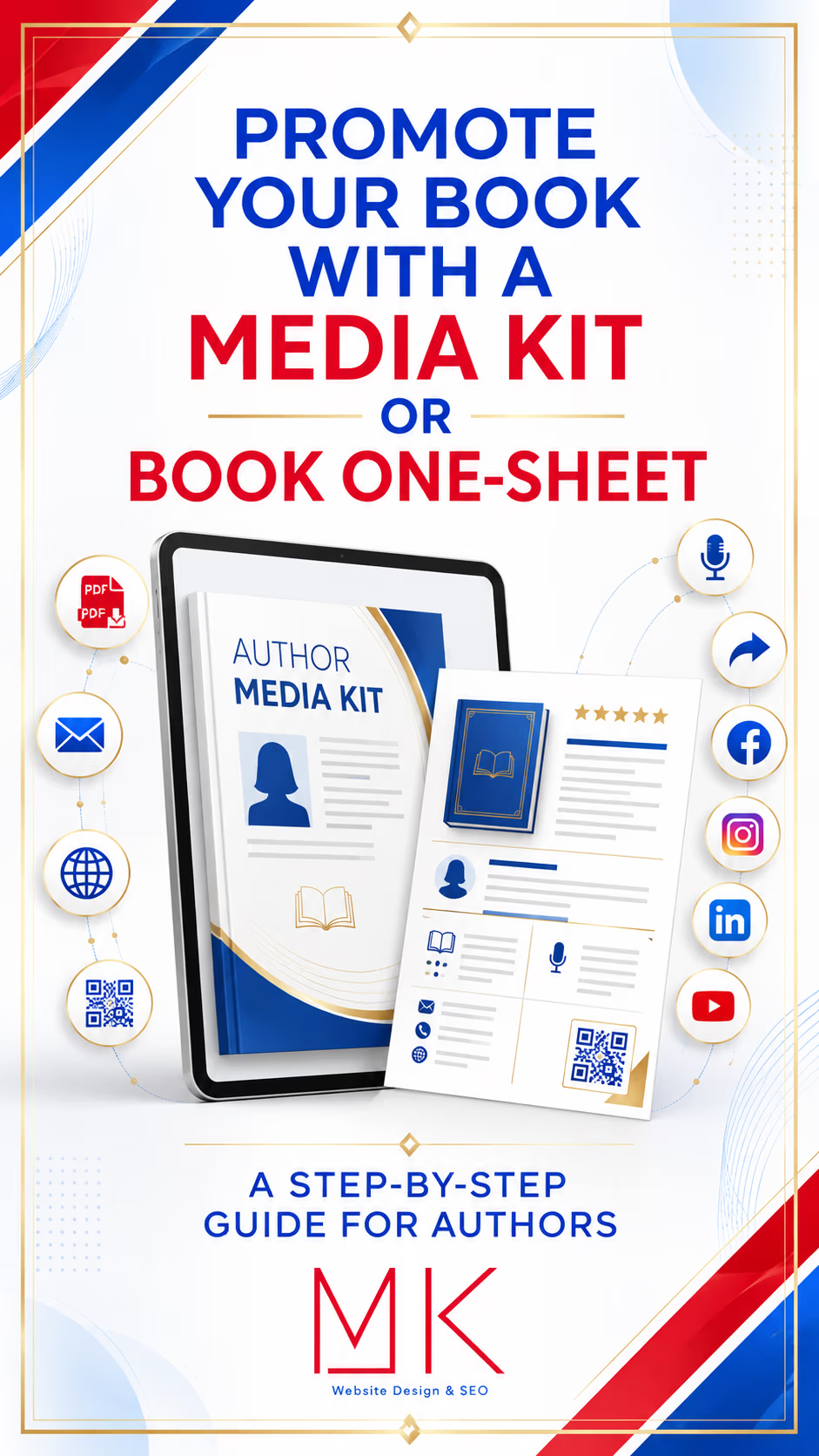
- Media kit or book one-sheet
- Previous interview links, when available
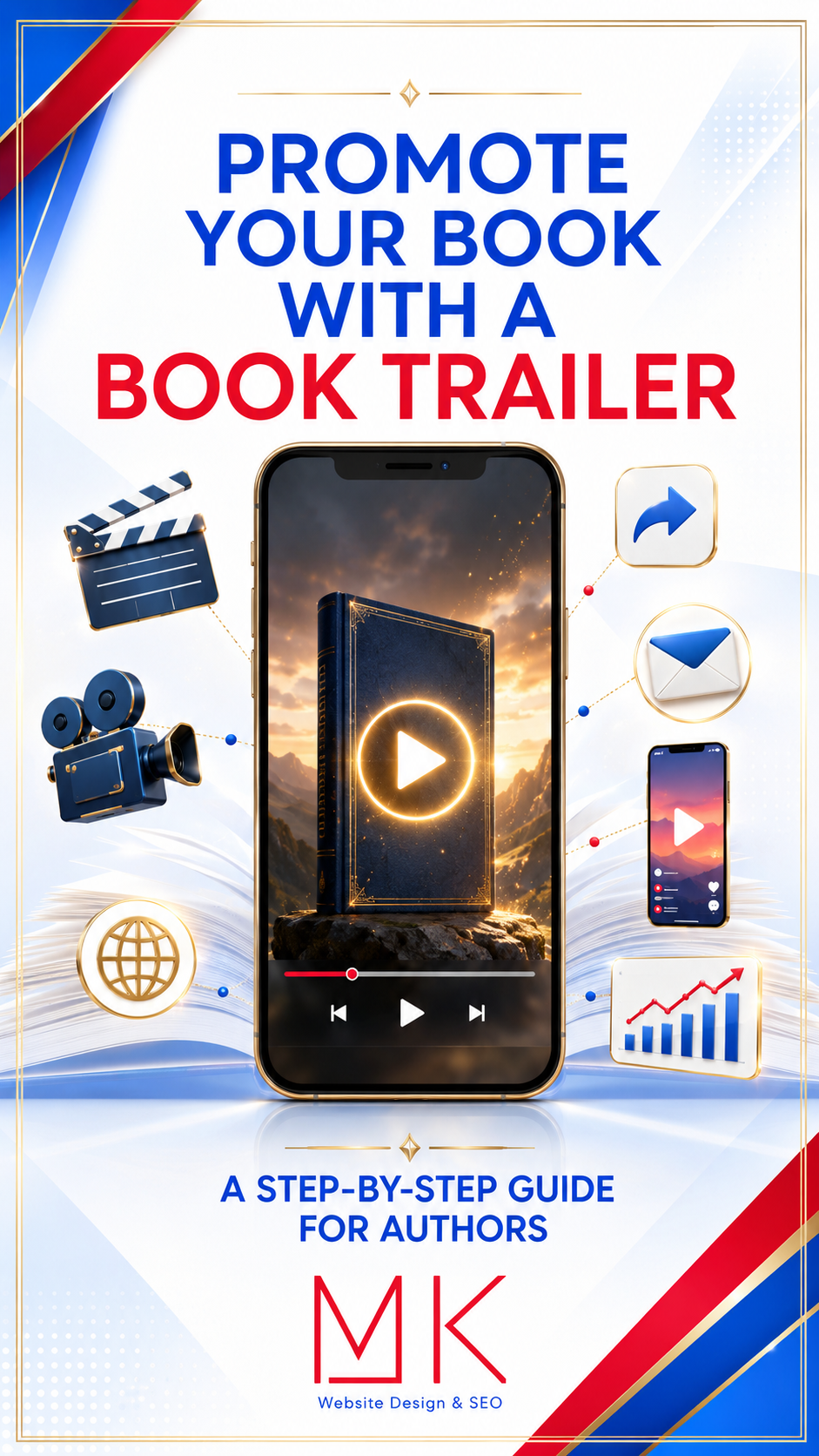
- Audiobook sample or book trailer, when relevant
Create a dedicated Press & Media or Podcast Guest page on the author website. This provides one stable link that can be included in every pitch.
Do not send several large unsolicited attachments. A concise email with a link to an organized media page is usually easier for the host to review. Attach materials only when the show’s submission instructions request them.
Step 6: Create a Podcast One-Sheet
A podcast one-sheet gives the host a quick overview of the guest and the proposed conversation.
Include:
- Author’s name and professional title
- Professional photograph
- Book cover
- One-sentence introduction
- Three to five interview topics
- Five to ten suggested questions
- Brief author biography
- Website
- Contact information
- Social media links
- Previous appearances or credentials
- Clear call to action
Keep the one-sheet readable and focused. It should help a host decide whether the author fits the show without searching through a long document.
Use the same colors, fonts, photographs, and tone as the author website and book brand.
Step 7: Research Podcasts That Match the Book
Search for shows by subject, audience, genre, theme, profession, region, and comparable authors.
Research sources may include:
- Apple Podcasts
- Spotify
- YouTube
- Podcast websites
- Google search
- Author interviews
- Publisher websites
- Podcast guest directories
- Industry newsletters
- Social media
- Book blogs
- Professional associations
- Podcast matching services
- Recommendations from other authors
Apple Podcasts organizes shows across more than 100 categories and subcategories, which can help authors explore relevant subject areas. Its search system also considers metadata, popularity, and user behavior, so try several combinations of genre, topic, guest name, and audience language when researching. Review Apple Podcasts categories and how search works on Apple Podcasts.
Search terms may include:
- [Book genre] podcast
- [Book theme] podcast interview
- Podcasts for [ideal reader]
- [Profession] podcast
- [Location] author podcast
- [Comparable author] interview
- [Book topic] expert guest
- Best podcasts about [subject]
Podcast matching platforms can also support research. For example, PodMatch says it connects podcast hosts and guests through profile-based matching and search tools. Review the current features, membership terms, and suitability before joining any paid service. Learn how PodMatch describes its guest-matching service.
Step 8: Qualify Every Podcast Before Pitching
Do not add a show to the outreach list simply because its title contains a useful keyword.
Listen to at least one or two recent episodes and review:
- The show’s central topic
- Intended audience
- Interview format
- Episode length
- Host’s style
- Tone and values
- Types of guests featured
- Publication frequency
- Date of the most recent episode
- Audio or video format
- Whether the show accepts guests
- Submission instructions
- Website quality
- Social media activity
- Whether the host promotes guests
- Whether the book genuinely fits
Confirm that the show is active. Many podcasts remain visible in directories long after they stop publishing.
Look for a meaningful connection. The author may fit because of the book’s genre, professional expertise, personal experience, local ties, audience, mission, or timely subject matter.
Avoid shows that require the author to misrepresent credentials, make unverified claims, participate in an inappropriate topic, or purchase an unrelated service as a condition of consideration.
Step 9: Build a Prioritized Podcast Outreach List
Organize prospects into three groups.
Priority A: Excellent Match
These shows directly serve the book’s ideal readers or the author’s professional audience.
Priority B: Strong Adjacent Match
These shows cover related topics, communities, industries, or life experiences.
Priority C: Aspirational Opportunity
These may have larger audiences or more competitive booking processes, but the author has a strong and credible angle.
Track:
- Podcast name
- Host name
- Website
- Email or submission form
- Relevant episode
- Audience
- Proposed angle
- Pitch date
- Follow-up date
- Response
- Recording date
- Publication date
- Episode link
- Promotional assets received
- Results and notes
Quality research and consistent follow-up are more valuable than an unorganized list of hundreds of shows.
Step 10: Follow the Podcast’s Submission Instructions
Some shows accept pitches by email. Others use:
- Website forms
- Guest applications
- Booking platforms
- Podcast matching services
- Publicist contacts
- Producer contacts
- Social media messages
- Referral-only systems
Follow the requested process exactly.
If a form asks for a short biography, topic description, sample questions, headshot, or previous interview, prepare that information in advance.
Do not bypass the show’s producer or booking form by contacting the host repeatedly across multiple platforms.
Step 11: Write a Personalized Podcast Pitch
A strong pitch should be concise, specific, and focused on the audience.
Include:
- Host’s name
- Show name
- Evidence that the author knows the program
- One clear reason the author fits
- Two or three interview angles
- Brief author credentials
- Book title
- Link to the media page or one-sheet
- Simple invitation to continue the conversation
Sample Podcast Pitch
Subject: Guest idea for [Podcast Name]: [Specific Listener-Focused Topic]
Hello [Host Name],
I enjoyed your recent conversation with [Guest Name] about [specific detail]. Your discussion of [detail] made me think your listeners may also be interested in [proposed topic].
I represent/am [Author Name], author of [Book Title]. [One or two sentences establishing relevant experience, story, or expertise.]
Possible conversation angles include:
- [Specific angle one]
- [Specific angle two]
- [Specific angle three]
[Author Name] can offer your listeners [clear benefit or takeaway]. You can review the biography, book information, interview topics, suggested questions, and images here: [Media Page Link].
Would this be a useful fit for an upcoming episode?
Thank you for your consideration,
[Name]
[Website]
[Email]
Personalization should be genuine. Do not mention an episode you did not listen to.
Step 12: Write a Strong Subject Line
The subject line should help the host understand the proposed conversation immediately.
Examples:
- Guest idea: What families misunderstand about grief
- Author interview: The forgotten history behind River Road
- Podcast guest for [Show Name]: Building trust after workplace conflict
- Children’s author on helping kids talk about anxiety
- Local Arizona author with a story for [Podcast Name]
- Guest proposal: The real investigation behind The Last Witness
Avoid vague or exaggerated subject lines such as:
- Amazing guest opportunity
- Bestselling author available
- You need this guest
- Guaranteed viral episode
- My new book
Do not claim bestseller status, expertise, media coverage, or credentials that cannot be verified.
Step 13: Make the Pitch About the Listener
The host’s first concern is not whether the author needs publicity. The host wants to know whether the conversation will serve the audience.
Instead of writing:
I just released a book and would love to promote it on your podcast.
Write:
Your listeners who are caring for aging parents may benefit from a conversation about the five decisions families should discuss before a crisis.
The second version gives the host a clear audience benefit and a possible episode concept.
Step 14: Use Timely and Evergreen Angles
A book may support several types of pitches.
Timely Angles
Connect the book to:
- Holidays
- Awareness months
- Anniversaries
- Newsworthy conversations
- Seasonal concerns
- Upcoming events
- Book launch dates
- Awards
- Film or television adaptations
- Community developments
Evergreen Angles
Offer topics that remain useful throughout the year:
- Leadership
- Relationships
- Parenting
- Resilience
- Creativity
- History
- Writing
- Wellness
- Personal finance
- Entrepreneurship
- Faith
- Education
Do not force the book into a breaking-news story. The connection should be relevant, responsible, and supported by the author’s experience.
Step 15: Follow Up Professionally
Podcast hosts and producers receive many messages. A missed response does not always mean a rejection.
Send one concise follow-up approximately seven to ten business days after the original pitch unless the submission instructions specify a different timeline.
Example:
Hello [Name], I wanted to follow up on the guest idea below regarding [topic]. I believe [Author Name]’s perspective on [specific value] could be useful to your listeners. I would be happy to provide any additional information. Thank you for your time.
If there is no response after one or two polite follow-ups, close the outreach and move forward.
Do not:
- Email every day
- Demand a response
- Contact the host on every social platform
- Add the host to a newsletter without permission
- Send an unsolicited calendar invitation
- Pretend another booking deadline exists
- Criticize the show for not responding
Step 16: Review Pay-to-Appear Opportunities Carefully
Some podcasts charge guests an appearance, production, sponsorship, or promotional fee. Others do not.
A fee does not automatically make an opportunity legitimate or illegitimate, but the arrangement should be clearly disclosed and evaluated as advertising.
Ask:
- What exactly is included?
- Is the episode editorial content, sponsored content, or an advertisement?
- Will the show identify the appearance as paid?
- Who is the audience?
- What are the current download or view figures?
- How are those figures measured?
- Where will the episode be distributed?
- How long will it remain available?
- Will the author receive usable clips?
- Can the author approve the description and links?
- Are there cancellation or refund terms?
- Does the cost support the campaign goal?
Never assume that a large fee guarantees sales, reviews, rankings, or media attention.
Step 17: Respond Quickly When a Host Is Interested
Once a host responds, provide the requested information promptly.
Confirm:
- Recording date and time
- Time zone
- Expected duration
- Audio or video format
- Recording platform
- Live or prerecorded format
- Interview theme
- Questions or preparation notes
- Book title and pronunciation
- Author name and pronunciation
- Introduction and biography
- Links for the show notes
- Whether a book or review copy is needed
- Whether the host permits a giveaway
- Expected publication date
- Whether clips will be provided
- Promotional expectations
Do not send a book unless the host requests one or the submission guidelines explain where it should be sent.
Step 18: Prepare for the Interview
Listen to another recent episode before recording and review the host’s style.
Prepare:
- A 20-second introduction
- A one-sentence book description
- Three central messages
- Two or three memorable stories
- Useful examples
- Supporting facts that can be verified
- A brief passage, if a reading may be requested
- A clear call to action
- Website address stated slowly and clearly
- Book title and purchase information
- Answers to predictable questions
Do not memorize every response word for word. Preparation should make the author more natural, not more mechanical.
Practice answering:
- Why did you write this book?
- Who is the book for?
- What surprised you during the process?
- What do you hope readers take away?
- What was the most difficult part of the journey?
- How does the book connect to this audience?
- Where can listeners learn more?
Step 19: Check the Recording Setup
Professional sound reflects well on both the author and the host.
Before recording:
- Use a reliable external microphone when possible
- Wear headphones
- Choose a quiet room
- Silence notifications
- Close unnecessary programs
- Use a stable internet connection
- Position the camera at eye level for video
- Use soft front lighting
- Keep the background clean and appropriate
- Place water nearby
- Test the microphone and camera
- Confirm the correct recording link
- Join several minutes early
Avoid recording in a large empty room, moving car, noisy café, or space with loud air conditioning.
For video interviews, wear clothing that fits the author brand and does not create distracting visual patterns.
Step 20: Give a Valuable Interview
During the conversation:
- Answer the host’s actual question
- Speak clearly and at a comfortable pace
- Use stories and examples
- Keep answers focused
- Avoid interrupting
- Respect time limits
- Explain unfamiliar terminology
- Be honest when you do not know something
- Avoid unsupported claims
- Mention the book naturally
- Thank the host and audience
Do not force the book title into every answer.
A useful guideline is to deliver value throughout the interview and use the closing call to action to tell listeners where they can find the book.
Step 21: Create a Clear Call to Action
Do not give listeners five complicated instructions.
Choose one primary action:
- Visit the author website
- Read the book page
- Listen to an audiobook sample
- Download a reader guide
- Join the email list
- Purchase the book
- Request the book from a library
- Follow the author
A strong call to action might be:
Visit JaneSmithBooks.com to learn more about Finding Morning, read the discussion guide, and choose your preferred retailer.
The author website is often the strongest destination because it can provide current purchase links, media, events, bonuses, and email signup information in one place.
Step 22: Send a Thank-You and Final Materials
Within 24 hours of recording, thank the host or producer.
Confirm or resend:
- Correct author biography
- Book title
- Book link
- Author website
- Social media handles
- Headshot
- Book cover
- Media page
- Any promised resource
Keep the message short. Do not ask the host to change the entire interview or guarantee a publication date.
Step 23: Promote the Episode When It Is Published
Once the episode is live, verify:
- Author’s name
- Book title
- Episode title
- Website link
- Purchase link
- Biography
- Social media tags
- Audio and video playback
If there is a material error, send one polite correction request.
Then share the episode through:
- Author website
- Blog
- Email newsletter
- YouTube
- TikTok
- Threads
- Book page
- Press & Media page
- Online media kit
- Publisher website
- Book club materials
Tag the show and host appropriately, thank them publicly, and link to the official episode whenever possible.
Spotify’s creator guidance recommends using guest graphics and short video clips before and after publication to maintain interest. Review Spotify’s social promotion guidance.
Step 24: Repurpose One Interview Into Multiple Marketing Assets
With the host’s permission and within the platform’s terms, one podcast appearance may become:
- Full-episode website feature
- Blog recap
- Newsletter feature
- 15-second video clip
- 30-second audiogram
- 60-second educational clip
- Quote graphic
- Instagram Reel
- Facebook Reel
- YouTube Short
- TikTok video
- LinkedIn post
- Pinterest Pin
- Carousel containing key lessons
- “As heard on” graphic
- Media-kit entry
- Speaker reel segment
- Frequently asked question article
- Book-club discussion prompt
- Podcast playlist
YouTube permits eligible podcast publishers to create promotional clips from podcast videos, while recommending that only complete episodes appear in the podcast playlist itself. Authors should obtain the host’s permission before downloading, editing, or reposting interview footage. Review YouTube’s podcast clip guidance.
Always confirm:
- Who owns the recording
- Whether the host permits reposting
- Whether edits require approval
- How the show should be credited
- Whether music or third-party media limits reuse
Step 25: Use a 30-Day Episode Promotion Schedule
Avoid sharing the episode once and forgetting it.
Publication Day
- Share the official episode link
- Thank the host
- Add the episode to the website
- Send an email announcement
Days 2–7
- Share a short clip
- Post a memorable quotation
- Publish a behind-the-scenes note
- Add the appearance to the media kit
Days 8–14
- Create a carousel with three key takeaways
- Share the episode on LinkedIn or Pinterest
- Post a second clip
- Mention the interview in a relevant reader group when permitted
Days 15–30
- Publish a blog article expanding one idea
- Reshare the episode with a different hook
- Add it to a podcast playlist
- Include it in the next newsletter
Evergreen interviews may be reshared later when the subject becomes timely again.
Step 26: Build Relationships Beyond the Interview
Podcast outreach should not be purely transactional.
After the appearance:
- Subscribe to the show
- Share the official episode
- Thank the producer and host
- Recommend an appropriate future guest when invited
- Comment on relevant future episodes
- Keep the show informed about meaningful updates
- Consider inviting the host to a reciprocal event when appropriate
Do not immediately ask for another appearance. Continue the relationship naturally and professionally.
Step 27: Measure the Results
Book sales are important, but they are not the only result of a podcast campaign.
Track:
- Pitches sent
- Responses
- Bookings
- Recording completion rate
- Published episodes
- Episode views or plays when provided
- Website visits
- Retailer clicks
- Email signups
- Social engagement
- Clip views
- Media-kit downloads
- Review requests
- Book-club inquiries
- Speaking invitations
- Library or bookstore contacts
- New professional relationships
- Book sales and audiobook activity
Use a dedicated website landing page or trackable link when appropriate, but keep the public link simple and trustworthy.
Ask new subscribers or customers how they discovered the author. Podcast influence may occur weeks or months after an interview.
Where Should Authors Share Their Podcast Interviews?
After an episode is published, place it where readers, media contacts, event organizers, and future hosts can continue discovering it.
1. Author Website
Add the episode to:
- Press & Media page
- Podcast appearance page
- Book page
- Author biography page
- Relevant blog article
- Home page, when the appearance is especially important
Use an embedded player when permitted, along with a summary, host credit, show link, and clear connection to the book.
2. Email Newsletter
Do more than paste the episode link.
Explain:
- Why the conversation matters
- What listeners will learn
- A memorable moment
- Where the book connects
- How to listen
A strong subject line might be:
A conversation about the story behind Finding Morning
3. Social Media
Adapt the appearance to each platform instead of posting identical text everywhere.
Share:
- Video clips
- Audiograms
- Quote cards
- Photographs
- Key takeaways
- Behind-the-scenes stories
- Episode links
- Thank-you posts
- Short educational posts inspired by the conversation
Always use captions on video content and confirm the host’s permission before editing or reposting clips.
4. YouTube
If the host publishes a video interview, share the official video.
With permission, the author may also create:
- YouTube Shorts
- Topic-specific clips
- Reaction or follow-up videos
- A playlist of media appearances
Link back to the complete official episode and credit the podcast.
5. Media Kit and One-Sheet
Add strong interviews to the Previous Media, Featured Interviews, or As Seen and Heard On section.
Include:
- Show name
- Episode title
- Host
- Publication date
- Brief topic description
- Clickable link
Choose the most relevant and professional appearances rather than listing every interview without context.
6. Podcast Guest Page
Create a webpage specifically for future hosts.
Include:
- Embedded interviews
- Author biography
- Topics
- Suggested questions
- Technical readiness
- Testimonials from hosts, when available
- Booking contact
Previous appearances help a host evaluate how the author communicates in an interview.
7. Book Clubs, Libraries, and Events
Share interviews that explore the book’s themes as supplemental material for:
- Book-club discussions
- Library programs
- Author events
- Classroom visits
- Conference presentations
- Speaking proposals
Add a QR code linking to a selected interview on printed materials when appropriate.
8. Blog Content
Turn one key idea from the interview into a complete article.
Embed or link the episode and credit the host. This creates useful website content while directing readers to the original conversation.
Common Podcast-Pitching Mistakes to Avoid
Sending the Same Pitch to Every Show
Generic mass outreach makes it clear that the author has not researched the program.
Making the Pitch Only About the Book
The pitch should propose a useful conversation for the listener.
Contacting Inactive Podcasts
Confirm that the show is still publishing before investing time in a personalized pitch.
Ignoring Submission Guidelines
Use the host’s preferred contact method and provide the requested information.
Sending Large Attachments
Provide a professional media-page link unless files are requested.
Claiming to Be a Listener Without Listening
False personalization damages credibility.
Offering Topics That Are Too Broad
Specific, listener-focused angles are easier to evaluate and schedule.
Following Up Too Often
One or two respectful follow-ups are enough.
Arriving Unprepared
Know the show, central message, stories, book description, and call to action.
Using Poor Audio
Test the equipment and record in a quiet environment.
Turning the Interview Into an Advertisement
Serve the audience first and introduce the book naturally.
Forgetting to Promote the Episode
Hosts notice guests who help the conversation reach more listeners.
Reusing Clips Without Permission
Confirm ownership and usage rights before editing or reposting audio or video.
Expecting Immediate Book Sales
Podcast guesting builds discovery, trust, searchable content, and relationships over time.
Podcast Outreach Checklist for Authors
Before pitching, confirm that you have:
- Defined the campaign goal
- Identified the ideal listener
- Created a clear positioning statement
- Developed three to five interview angles
- Prepared a short and long biography
- Selected a professional headshot
- Prepared a high-resolution book cover
- Created a media kit
- Created a podcast one-sheet
- Written suggested questions
- Built a Press & Media or Podcast Guest page
- Confirmed all website and purchase links
- Researched active podcasts
- Listened to recent episodes
- Verified submission instructions
- Recorded host and producer names correctly
- Personalized every pitch
- Prepared a follow-up schedule
- Evaluated paid opportunities carefully
- Tested the microphone, headphones, camera, and internet connection
- Practiced the book description and central messages
- Prepared one clear call to action
- Created a post-interview thank-you message
- Planned episode promotion
- Confirmed clip-reuse permission
- Updated the media kit after publication
- Tracked campaign results
Help the Right Listeners Discover Your Book
Podcast guest interviews can give authors far more than a few minutes of publicity. They create meaningful conversations, introduce books to carefully matched audiences, provide long-lasting content, strengthen credibility, and build professional relationships.
The most effective authors do not approach podcasts with the message, “Please promote my book.” They approach hosts with a better question:
“What useful, memorable, or inspiring conversation can I offer your listeners?”
When the match is right and the interview delivers genuine value, the book becomes a natural extension of the conversation.
MK Marketing helps authors develop podcast interview topics, media kits, book one-sheets, press pages, personalized outreach campaigns, virtual book tours, promotional graphics, social media content, book trailers, and long-term marketing strategies.
Your book has something worth sharing. The right podcast can help more people hear it.