Publishing an audiobook gives authors a new way to reach readers who prefer listening while driving, exercising, traveling, working, or relaxing.
However, creating the audiobook is only the beginning. Like a print book or ebook, an audiobook needs a focused marketing campaign to help listeners discover it.
Audiobook marketing requires authors to think differently about content. Instead of relying only on the book cover and written description, authors can use narration samples, audiograms, video clips, narrator interviews, behind-the-scenes content, and promotional codes to demonstrate the listening experience.
In this step-by-step guide, MK Marketing explains how authors can market their audiobook, where the complete audiobook may be distributed, and where promotional samples can be posted and shared after production.
Understand the Difference Between Distribution and Promotion
Before beginning an audiobook campaign, it is important to understand the difference between distributing the complete audiobook and sharing promotional content.
Audiobook Distribution
Distribution makes the complete audiobook available for purchase, subscription listening, or library borrowing through approved retailers and platforms.
Depending on the author’s distribution agreement, the audiobook may be available through:
- Audible
- Amazon
- Apple Books
- Spotify
- Google Play Books
- Kobo
- Audiobooks.com
- Libro.fm
- Chirp
- Everand
- Storytel
- Hoopla
- OverDrive and Libby
- Other retailer and library partners
Not every distributor sends audiobooks to every platform. Availability can also vary by territory, title, pricing model, and rights agreement.
Audiobook Promotion
Promotion uses approved samples and marketing materials to encourage listeners to purchase, stream, or borrow the complete audiobook.
Promotional content may include:
- Retail samples
- Short narration clips
- Audiograms
- Vertical videos
- Book trailer adaptations
- Narrator interviews
- Behind-the-scenes recordings
- Review graphics
- Promotional codes
- Author readings
- Character excerpts
- Website audio players
- Podcast appearances
Do not upload the complete audiobook to YouTube, a podcast feed, an author website, or social media unless your distribution agreement and rights ownership specifically permit it.
Step 1: Confirm the Audiobook Rights
Before distributing or promoting the audiobook, confirm who controls the audio rights.
The author may own the rights, or they may be controlled by:
- A traditional publisher
- An audiobook publisher
- A production company
- A literary agent
- A co-author
- An estate
- A licensing partner
- A narrator under a royalty-share agreement
Review the contracts carefully.
Confirm:
- Who owns the audio rights
- Which territories are covered
- Which languages are covered
- Whether distribution is exclusive
- Whether promotional samples are permitted
- How long the agreement remains active
- Whether the audiobook can be sold directly
- Whether library distribution is permitted
- Whether promotional codes are available
- Whether the narrator must approve sample usage
Do not assume that owning the print or ebook rights automatically means you own the audiobook rights.
Step 2: Review the Distribution Agreement
An audiobook’s distribution agreement determines where the complete recording may be sold or shared.
For example, ACX currently offers exclusive and non-exclusive distribution arrangements.
Under an exclusive ACX arrangement, the audiobook is distributed through Audible, Amazon, and Apple Books, and the rights holder cannot distribute or sell the audiobook through other stores during the agreement. A non-exclusive arrangement allows the rights holder to make separate distribution arrangements with additional platforms. Review ACX’s current distribution options.
This decision should be made before uploading the complete audiobook to multiple services.
Ask:
- Is the agreement exclusive or non-exclusive?
- Which retailers are included?
- Are libraries included?
- Can the author sell the audiobook directly?
- Are there territorial restrictions?
- Can the author distribute through Spotify?
- Can the audiobook be included in subscription services?
- What royalty rate applies?
- What promotional tools are provided?
- Can the agreement be changed later?
- How long does the distribution term last?
If you do not understand the agreement, consult the distributor, publisher, agent, or a qualified publishing attorney.
Step 3: Make Sure the Audiobook Is Professionally Produced
Marketing cannot compensate for poor sound quality.
Before releasing the audiobook, confirm that it has been professionally:
- Narrated
- Recorded
- Edited
- Proofed
- Mastered
- Divided into chapters
- Labeled
- Exported
- Quality checked
Listen for:
- Background noise
- Inconsistent volume
- Incorrect pronunciations
- Repeated lines
- Missing sentences
- Long pauses
- Mouth noise
- Abrupt edits
- Chapter-label errors
- Inconsistent character voices
- Differences in recording quality
Listen to the final files using headphones, computer speakers, and a mobile device.
The first few minutes are especially important because potential listeners may use the retailer sample to decide whether to purchase the audiobook.
Step 4: Prepare Accurate Audiobook Metadata
Metadata helps retailers and listeners understand and discover the audiobook.
Prepare:
- Title
- Subtitle
- Series name
- Series number
- Author’s name
- Narrator’s name
- Publisher
- Publication date
- Language
- Genre
- Categories
- Description
- Keywords
- Copyright information
- ISBN, when applicable
- Running time
- Abridged or unabridged status
- Territorial rights
- Retail price
- Cover artwork
Use consistent information across all retailer listings.
The audiobook title, subtitle, series information, and author name should match the corresponding print and ebook editions when appropriate.
Credit the narrator correctly. Listeners often search for and follow narrators they enjoy.
Step 5: Create Professional Audiobook Cover Art
Audiobook covers are typically displayed as square images.
Do not simply place a rectangular print cover inside a square canvas without considering readability.
The audiobook cover should:
- Preserve the book’s existing identity
- Display the title clearly
- Display the author’s name
- Remain readable at thumbnail size
- Match the genre
- Use high-resolution artwork
- Meet the distributor’s technical requirements
- Include the narrator’s name when appropriate
Review the cover on a phone screen. If the title cannot be read when the image is small, the design may need to be adjusted.
Do not add retailer logos unless the retailer’s branding guidelines permit their use.
Step 6: Select the Strongest Audio Sample
Choose a sample that demonstrates the quality of the narration and creates immediate interest.
A strong sample may include:
- An intriguing opening
- A dramatic scene
- A compelling character moment
- A surprising revelation
- An emotional passage
- A practical nonfiction insight
- A humorous exchange
- A memorable piece of narration
Avoid samples that:
- Require too much background information
- Reveal a major spoiler
- Begin with a long list of acknowledgments
- Contain difficult-to-understand character references
- Include excessive silence
- Depend heavily on visual material
- Misrepresent the tone of the complete book
Create samples in several lengths, subject to your agreements:
- 15 seconds
- 30 seconds
- 60 seconds
- Two to five minutes
- The official retailer sample
Always verify the distributor’s and narrator’s rules before using audiobook audio outside the retailer listing.
Step 7: Create Audiograms
An audiogram combines audio with a visual element.
It may include:
- Audiobook cover
- Animated sound wave
- Narration sample
- Captions
- Review quotation
- Author and narrator names
- Purchase direction
- Website
- Platform-specific call to action
Audiograms turn an audio-only product into social media content.
Create:
- Vertical 9:16 audiograms for Reels, Stories, TikTok, and Shorts
- Square 1:1 audiograms for social feeds
- Horizontal 16:9 audiograms for YouTube and websites
Include captions so viewers can understand the clip without sound.
Keep the book cover visible and include a clear call to action.
Step 8: Create a Dedicated Audiobook Page
The author website should serve as the central destination for the audiobook campaign.
Create a dedicated page containing:
- Audiobook cover
- Book description
- Audio sample
- Author’s name
- Narrator’s name
- Narrator biography
- Running time
- Available formats
- Editorial reviews
- Retailer links
- Library information
- Book trailer
- Audiobook-related interviews
- Purchase or listening buttons
- Email signup
- Media contact
If the audiobook is available through several retailers, create one central page containing all approved listening options.
This prevents social posts and printed materials from becoming outdated every time a new retailer link becomes available.
Step 9: Create a Universal Audiobook Link
A universal link directs listeners to a page where they can select their preferred retailer or listening platform.
Instead of promoting only one store, the author can offer available options such as:
- Audible
- Apple Books
- Spotify
- Google Play Books
- Kobo
- Audiobooks.com
- Libro.fm
- Library platforms
- Direct purchase, when permitted
The universal link can be used in:
- Social media bios
- Email newsletters
- Audiograms
- QR codes
- Podcast descriptions
- YouTube descriptions
- Media kits
- Bookmarks
- Flyers
- Event signage
Check every retailer link before launching the campaign.
A title may not become available at every retailer at the same time. Wide distributors may continue discovering and reporting retailer links after release.
Step 10: Develop an Audiobook Launch Plan
Do not wait until publication day to begin marketing.
A simple campaign may begin four to eight weeks before release.
Before the Release
Share:
- Audiobook announcement
- Cover reveal
- Narrator announcement
- Recording updates
- Behind-the-scenes photographs
- Short narrator introduction
- Sample teaser
- Release-date announcement
- Preorder information, when available
During Release Week
Share:
- Official audiobook sample
- Audiogram
- Narrator interview
- Author video
- Newsletter announcement
- Retailer links
- Review quotations
- Promotional code opportunity
- Audiobook giveaway
- Launch event
After the Release
Continue with:
- Additional sample clips
- Listener reviews
- Narrator features
- Character clips
- Behind-the-scenes stories
- Podcast interviews
- Library promotion
- Book-club outreach
- Seasonal promotions
- Award announcements
- Series promotions
Audiobook promotion should continue beyond release week.
Step 11: Introduce the Narrator
The narrator is an important part of the audiobook’s appeal.
Feature the narrator through:
- Social media introduction
- Website biography
- Recorded interview
- Blog post
- Newsletter question-and-answer feature
- Behind-the-scenes video
- Live conversation
- Podcast episode
- Narrator takeover
- Joint giveaway
Possible interview questions include:
- What attracted you to this book?
- How did you prepare for the narration?
- How did you develop the character voices?
- Which scene was the most challenging?
- Which scene was the most enjoyable?
- How did you research the pronunciations?
- What do you hope listeners experience?
- What other audiobooks have you narrated?
Ask the narrator whether they can share the audiobook with their audience.
Coordinate all promotional usage with the narrator and follow the production agreement.
Step 12: Collect Audiobook-Specific Reviews
Audiobook reviews should address the listening experience, not only the written content.
Encourage reviewers to discuss:
- Narration quality
- Voice performance
- Character differentiation
- Pacing
- Emotional delivery
- Pronunciation
- Audio quality
- Overall listening experience
- Suitability for the genre
Use short quotations in:
- Audiograms
- Social graphics
- Website banners
- Newsletters
- Media kits
- Retailer promotions
- Paid advertisements
- Book trailers
Do not change the reviewer’s meaning, and follow each retailer’s review policies.
Never offer compensation in exchange for a positive review.
Step 13: Use Promotional Codes Strategically
Some audiobook distributors provide promotional or redemption codes.
Codes can be used for:
- Review copies
- Giveaways
- Podcast hosts
- Media contacts
- Book bloggers
- Influencers
- Book clubs
- Launch-team members
- Newsletter subscribers
- Librarians
- Event organizers
ACX currently provides promotional codes for eligible titles in the United States and United Kingdom marketplaces. Availability and rules may vary, so review the current ACX guidance before building a campaign around them. Review ACX’s distribution information.
Keep a record of:
- Code
- Recipient
- Date sent
- Market
- Redemption status
- Follow-up date
- Review or promotional outcome
A promotional code should not come with a requirement for a positive review.
Where Can Authors Distribute the Complete Audiobook?
The full audiobook should only be submitted through approved distribution channels that comply with the author’s rights and contracts.
1. Audible, Amazon, and Apple Books Through ACX
ACX distributes eligible audiobooks to Audible, Amazon, and Apple Books.
Authors should review the difference between exclusive and non-exclusive distribution before selecting this route.
An exclusive agreement restricts outside distribution. A non-exclusive agreement permits the rights holder to arrange distribution through additional services. Review ACX distribution terms.
Do not upload an ACX-exclusive audiobook to another retailer, subscription service, direct-sales platform, or public website.
2. Spotify
Self-published authors can publish audiobooks directly to Spotify through Spotify for Authors.
The platform allows eligible self-published authors to:
- Create an account
- Upload an audiobook
- Establish payment information
- Publish directly to Spotify
- Review performance insights
- Learn more about listeners
Spotify announced direct audiobook publishing for self-published authors through Spotify for Authors in 2025. Review Spotify’s direct-publishing information.
Authors whose audiobook is already on Spotify through a publisher or distributor should work with that partner to obtain catalog access rather than creating a duplicate listing. Review Spotify for Authors.
3. Wide Audiobook Distributors
A wide distributor can deliver an audiobook to multiple retailers, subscription services, and library platforms.
Depending on the distributor and the author’s selections, outlets may include:
- Spotify
- Apple Books
- Google Play Books
- Kobo
- Audiobooks.com
- Libro.fm
- Chirp
- Everand
- Storytel
- Hoopla
- OverDrive
- Other regional retailers
Spotify for Authors has partnered with Voices by INaudio to offer broader distribution options to authors who want to reach additional platforms. Review Spotify’s distribution announcement.
Confirm the current retailer list, royalties, fees, payment schedule, and rights terms before selecting a distributor.
4. Google Play Books
Google Play Books operates a Partner Center that includes audiobook publishing, sales, metadata, pricing, and promotional tools.
Availability and account eligibility may vary by territory. Review the current requirements before preparing the files. Visit the Google Play Books Partner Center Help.
Do not create duplicate versions if a distributor is already delivering the audiobook to Google Play Books.
5. Library Platforms
Libraries can help an audiobook reach listeners who discover books through borrowing rather than purchasing.
Potential library services include:
- OverDrive and Libby
- Hoopla
- Other regional library platforms
Authors generally reach library platforms through an audiobook distributor or publisher.
ACX does not currently distribute audiobooks to libraries. Authors who want library distribution through other services should consider this before selecting an exclusive ACX agreement. Review ACX’s library-distribution information.
Library availability does not mean every library will automatically purchase the title. The audiobook must be available in the library marketplace, and individual libraries may decide whether to add it.
Where Can Authors Post and Share Audiobook Promotions?
The following channels are appropriate for marketing materials, approved samples, and retailer links.
1. The Author’s Website
Post:
- Audiobook sample
- Audiobook cover
- Narrator biography
- Purchase links
- Library information
- Reviews
- Audiograms
- Interviews
- Launch announcement
- Giveaway information
Use the website as the central location for all audiobook links.
2. YouTube
Create an audiobook playlist containing:
- Official sample
- Audiograms
- Narrator interview
- Author interview
- Behind-the-scenes video
- Audiobook announcement
- Book trailer
- Review features
- Character clips
- Vertical Shorts
Optimize each video with:
- Book title
- Author name
- Narrator name
- Genre keywords
- Audiobook retailer links
- Author website
- Clear description
- Custom thumbnail
- Captions
- Relevant hashtags
Do not post the full audiobook unless the rights and distribution agreement permit free public release.
3. Instagram
Share audiobook content through:
- Reels
- Stories
- Carousel posts
- Audiograms
- Narrator introductions
- Cover reveals
- Review graphics
- Countdown stickers
- Question stickers
- Live interviews
- Highlights
Create an Audiobook Highlight so new visitors can easily find the campaign.
Use the vertical 9:16 format for Reels and Stories.
4. Facebook
Post audiobook content on:
- Author Page
- Personal profile, when appropriate
- Reels
- Stories
- Launch-event page
- Book-club page
- Reader groups that permit promotion
- Genre groups that permit author posts
- Paid advertising campaigns
Pin the primary audiobook announcement during the launch period.
Always review group rules before posting promotional content.
5. TikTok and BookTok
Create short videos featuring:
- Narration sample
- Emotional quotation
- Character introduction
- Author reaction
- Narrator performance
- Behind-the-scenes recording
- Genre hook
- Reader review
- Book recommendation
- “Listen if you love…” concept
Use captions and place the strongest hook in the opening seconds.
Potential hashtags include:
- #Audiobook
- #Audiobooks
- #AudiobookTok
- #BookTok
- #AuthorTok
- #Narrator
- #VoiceActor
- Genre-specific hashtags
Combine broad hashtags with specific descriptions of the book’s genre, themes, setting, and audience.
6. Pinterest
Create Pins featuring:
- Audiobook cover
- Narrator introduction
- Audiogram
- Review quotation
- Character quotation
- Audiobook sample
- Book trailer
- Listening recommendation
- Gift guide
- Book-club suggestion
Link each Pin to the audiobook page or universal retailer page.
Use keyword-rich titles and descriptions.
7. LinkedIn
LinkedIn may be especially useful for:
- Business books
- Leadership books
- Memoirs
- Professional development
- Education
- History
- Industry-specific nonfiction
- Authors who speak or consult
Share:
- Audiobook announcement
- Narrator collaboration
- Behind-the-scenes production story
- Short audio or video sample
- Professional lessons from the book
- Media appearances
- Speaking topics
- Retailer or website link
Connect the audiobook to a meaningful professional conversation rather than posting only a purchase request.
8. Email Newsletters
Email subscribers are often the strongest audience for an audiobook announcement.
Send emails featuring:
- Audiobook release
- Narrator reveal
- Sample clip
- Behind-the-scenes story
- Promotional code opportunity
- Giveaway
- Review quotation
- Library availability
- Holiday promotion
- Series announcement
Most email programs do not play audio consistently inside every inbox. Use a graphic with a play button that links to the author’s website, Spotify, YouTube, or a retailer sample.
9. Podcasts
Audiobooks and podcasts naturally complement one another.
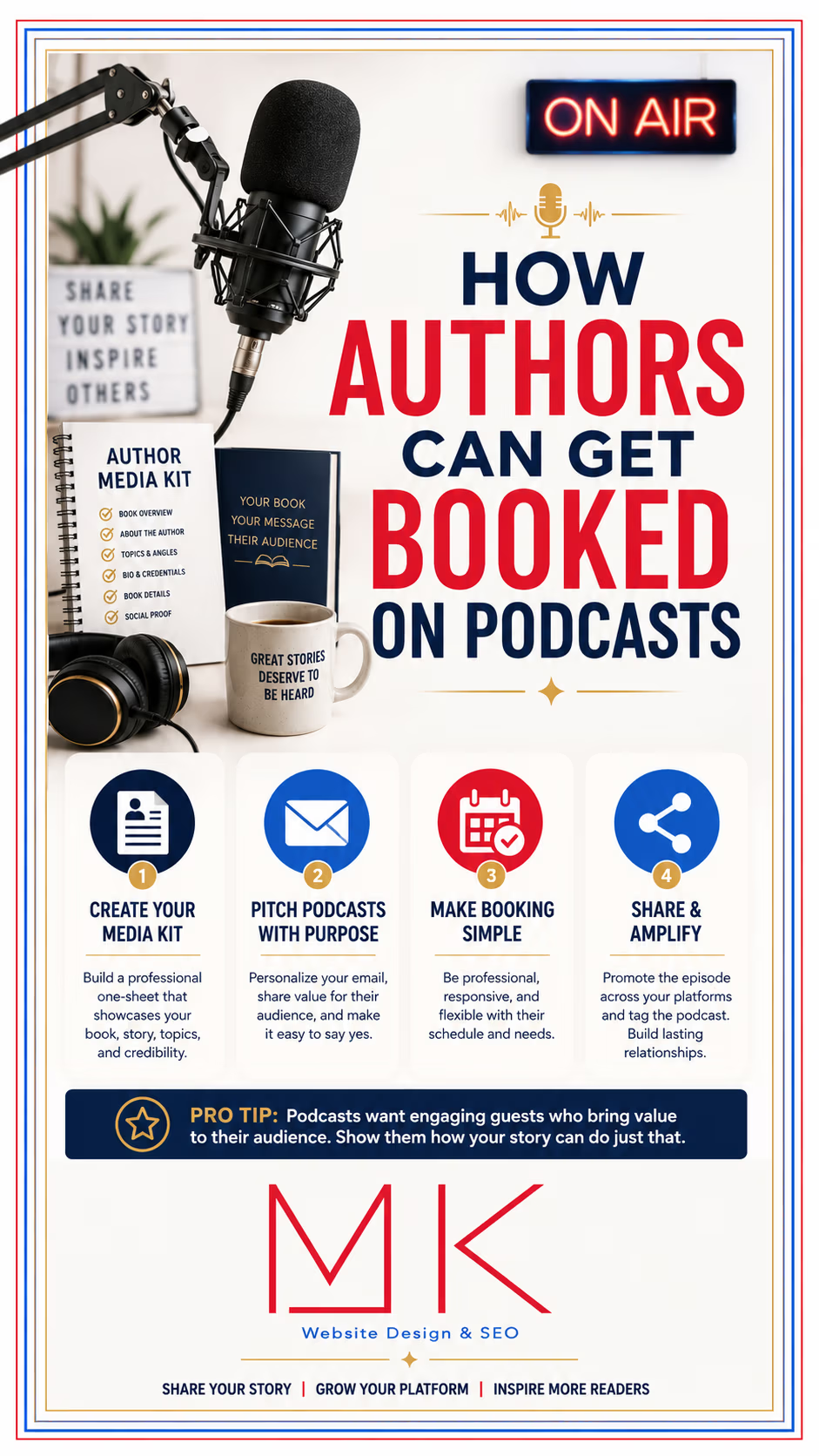
Pitch the author or narrator for interviews about:
- The story behind the book
- Audiobook production
- Choosing the narrator
- Character voices
- Research
- Themes
- Professional expertise
- Personal experiences
- The growth of audio storytelling
Provide the host with:
- Media kit
- Audiobook one-sheet
- Approved sample
- Suggested questions
- Author biography
- Narrator biography
- Retailer links
- Promotional code, when available
- Book cover
- Audiobook cover
Do not send a large audio file unless requested. Provide a private or public link.
10. Blogs and Online Magazines
Create guest posts and features about:
- Why the author created an audiobook
- How the narrator was selected
- The recording process
- The challenge of performing the book
- Differences between reading and listening
- Memorable character voices
- Audiobook production lessons
- The role of sound in storytelling
Include an approved sample and listening links.
11. Virtual Book Tours
Incorporate the audiobook into:
- Author interviews
- Narrator interviews
- Book spotlights
- Audiobook reviews
- Giveaways
- Guest posts
- Social media features
- Podcast appearances
- Audio excerpts
Provide tour participants with organized assets and clear usage instructions.
12. Book Reviewers and Audiobook Influencers
Research reviewers who specifically cover audiobooks or the book’s genre.
Send a personalized pitch containing:
- Short book description
- Genre
- Running time
- Author
- Narrator
- Release date
- Retail links
- Review-copy information
- Promotional code, when available
- Content considerations
- Contact details
Follow each reviewer’s submission rules.
13. Bookstores
Although the product is digital, bookstores may still help promote audiobooks through:
- Author events
- QR-code displays
- Newsletter features
- Local-author pages
- Social media
- Book clubs
- Printed bookmarks
- Cross-promotion with print editions
A QR code can direct customers to the author’s audiobook page.
Obtain the bookstore’s permission before placing printed materials.
14. Libraries
Contact libraries about:
- Audiobook availability
- Author talks
- Virtual events
- Book-club discussions
- Local-author features
- Newsletter inclusion
- Community presentations
- Narrator events
Provide the exact information librarians need to locate the audiobook in their purchasing system.
Do not tell readers that an audiobook is available through a library platform until you have confirmed its listing.
15. Book Clubs
Offer:
- Audiobook listening option
- Discussion guide
- Author appearance
- Narrator appearance
- Group discount, when permitted
- Giveaway
- Behind-the-scenes session
- Hybrid reading and listening experience
Book clubs can choose print, ebook, audiobook, or a combination of formats.
16. Author Events and Book Signings
Promote the audiobook at in-person events through:
- QR codes
- Table signs
- Bookmarks
- Postcards
- Audiobook cover display
- Tablet playing a sample
- Narrator video
- Giveaway
- Listening station with headphones
Keep the volume appropriate and obtain permission from the venue before playing audio.
17. Media Kits and Book One-Sheets
Update the author media kit to include:
- Audiobook cover
- Narrator
- Running time
- Release date
- Distribution platforms
- Sample link
- Reviews
- Retailer links
- Promotional codes
- Interview topics
- Contact information
Create a separate audiobook one-sheet for podcast, reviewer, bookstore, and library outreach.
Step 14: Use Paid Advertising Carefully
Audiobook samples can be used in paid advertising when the author has the necessary rights and the audio is approved for commercial promotion.
Potential platforms include:
- YouTube
- TikTok
- Spotify
- Book-focused advertising services
Create shorter versions for advertising:
- 6–10-second hook
- 15-second sample
- 30-second audiogram
- Review-focused clip
- Narrator-focused clip
Keep the call to action simple:
- Listen now.
- Hear the story.
- Start listening today.
- Available in audiobook.
- Listen to a sample.
- Find it on your favorite audiobook platform.
Confirm that music, narration, images, fonts, and video clips are licensed for paid advertising.
Step 15: Repurpose the Audiobook Into Ongoing Content
One audiobook can provide months of marketing content.
Create:
- Official sample
- 15-second audiograms
- 30-second audiograms
- 60-second audiograms
- Character clips
- Chapter-opening clips
- Review clips
- Narrator quotations
- Author quotations
- Behind-the-scenes videos
- Narrator interview clips
- Pronunciation videos
- Recording-studio photographs
- “Why I chose this scene” posts
- Listener reaction graphics
- Seasonal promotions
- Gift-guide content
- Series-listening guides
- Book-club content
Each piece should direct listeners to the audiobook page or approved retailer.
Step 16: Track the Results
Measure more than social media views.
Track:
- Audiogram views
- Video completion rate
- Shares
- Saves
- Comments
- Website visits
- Sample plays
- Retailer clicks
- Promotional code redemptions
- Sales
- Subscription listening
- Library borrows
- Reviews
- Email signups
- Podcast inquiries
- Media coverage
Spotify for Authors provides eligible authors and publishers with audiobook audience and performance insights. Review Spotify for Authors.
Sales reporting can vary by distributor and retailer. Some platforms report quickly, while others may take longer to provide finalized results.
Common Audiobook-Marketing Mistakes to Avoid
Ignoring Distribution Restrictions
An exclusive agreement may prevent the audiobook from being distributed through additional platforms.
Posting the Full Audiobook Publicly
Do not upload the complete recording without confirming the rights and contract terms.
Using Unapproved Samples
Confirm promotional permissions with the publisher, distributor, producer, and narrator.
Forgetting the Narrator
The narrator is part of the audiobook’s identity and may have an existing audience.
Using Poor Audio Clips
Promotional samples should demonstrate the quality of the complete audiobook.
Sharing Only the Cover
Use audio to let potential listeners experience the narration.
Creating Content Without Captions
Audiograms and videos should remain understandable when muted.
Promoting Only One Retailer
When permitted, provide listeners with a central page containing all available options.
Launching Without a Website Page
Social media posts disappear quickly. The audiobook needs a permanent home.
Stopping After Release Week
Audiobooks can be marketed for months or years through new clips, reviews, interviews, events, and seasonal campaigns.
Audiobook-Marketing Checklist
Before launching the campaign, confirm that you have:
- Verified the audio rights
- Reviewed the distribution agreement
- Confirmed exclusive or non-exclusive status
- Proofed the final recording
- Approved the narrator credits
- Prepared accurate metadata
- Created the audiobook cover
- Selected approved samples
- Created horizontal and vertical audiograms
- Added captions
- Created an audiobook website page
- Collected retailer links
- Created a universal link
- Updated the media kit
- Created an audiobook one-sheet
- Prepared narrator content
- Planned email announcements
- Scheduled social media posts
- Identified audiobook reviewers
- Planned podcast outreach
- Considered library distribution
- Tested every link
- Created trackable links
- Established a launch calendar
- Created an ongoing content plan
Help Listeners Discover Your Audiobook
An audiobook creates an entirely new way for readers to experience an author’s work. It also creates new opportunities for social media content, podcast outreach, reviews, library discovery, narrator partnerships, and long-term promotion.
The strongest audiobook campaigns combine professional production, accurate distribution, engaging audio samples, consistent branding, and a clear path to purchase or listen.
MK Marketing helps authors promote audiobooks through websites, audiograms, book trailers, media kits, social media campaigns, podcast outreach, virtual book tours, email marketing, and customized promotional strategies.
Your audiobook has already given your story a voice. Now it is time to help listeners hear it.